


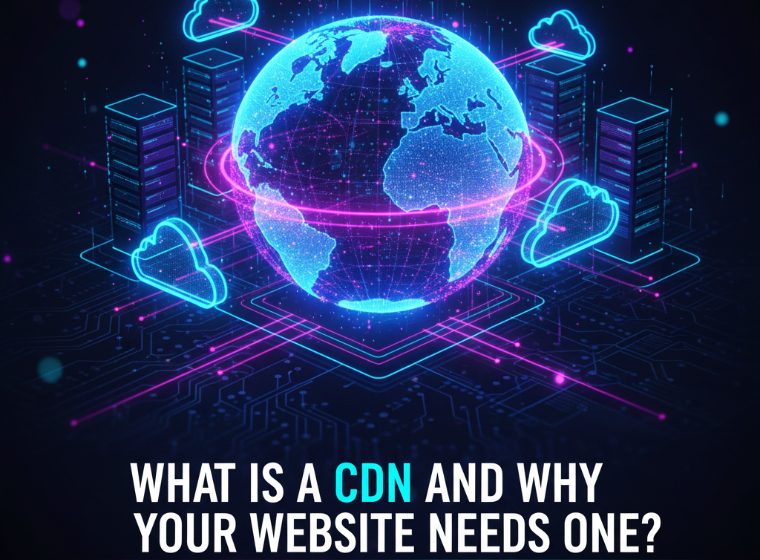
What Is a CDN and Why Your Website Needs One?
What is CDN?
A content delivery network (CDN) is a group of servers located in different parts of the world. Instead of loading everything from a central server, your website's content is stored (or "cached") on multiple servers around the world. So when someone visits your website:
- A user in Uganda loads your site from a server in Kenya.
- A user in the US loads it from a server in New York.
- A user in Asia loads it from a server in Singapore.
This makes your website much faster.
Why CDNs matter Here are the biggest benefits:
1. Faster website loading CDNs reduce the distance between the user and your files. Fast website = happy visitors.
2. Better performance on mobile and slow networks; CDNs deliver optimized content, improving speeds even on weak connections.
3. Strong security; Most CDNs provide: DDoS protection Secure HTTPS support firewall filtering It protects your website from attacks.
4. Decrease in server load; Your main server doesn't have to handle everything. The CDN handles most of the file requests, which means fewer crashes.
5. Better SEO Google loves fast websites. Using a CDN can improve your rankings because speed is a ranking factor.
Real life example; Imagine your website uses 3 MB images. If someone in Canada visits your site hosted in Uganda, it will load slowly. But with CDN:
- Your images load from Canada,
- Your CSS is loaded from the nearest CDN node,
- Your JS loads faster for all users. Users around the world get the same speeds.
Popular CDN Providers; Here are popular CDNs you can start with:
- Hostinger
- Cloudflare (free and powerful)
- google cloud cdn
- AWS CloudFront
- Akamai, etc
If you are a beginner, the Cloudflare free plan is one of the best options.
When should you use a CDN? If your website has:
- visitor from different regions
- Images, videos, or large files
- A need for strong security
- goal to improve SEO
Lets Hear From Mr FERDY KORPERSHOEK
2 Comments
D
debby
November 12, 2025am the first here
Recent Posts



Natukunda Phionah
March 24, 2026Very interesting and amazing stuff. Keep it up