


Shared Hosting vs VPS Hosting: Which One Should You Choose in 2026?
Choosing the right web hosting solution is one of the most important decisions for any website owner. Whether you are launching a personal blog, business website, online store, or custom web application, your hosting environment directly affects your website's speed, security, reliability, and scalability.
Two of the most popular hosting options available today are Shared Hosting and VPS Hosting. While both allow you to host websites online, they differ significantly in terms of performance, control, security, and cost.
In this guide, we'll explain the differences between Shared Hosting and VPS Hosting, helping you determine which option best suits your needs in 2026.
What Is Shared Hosting?
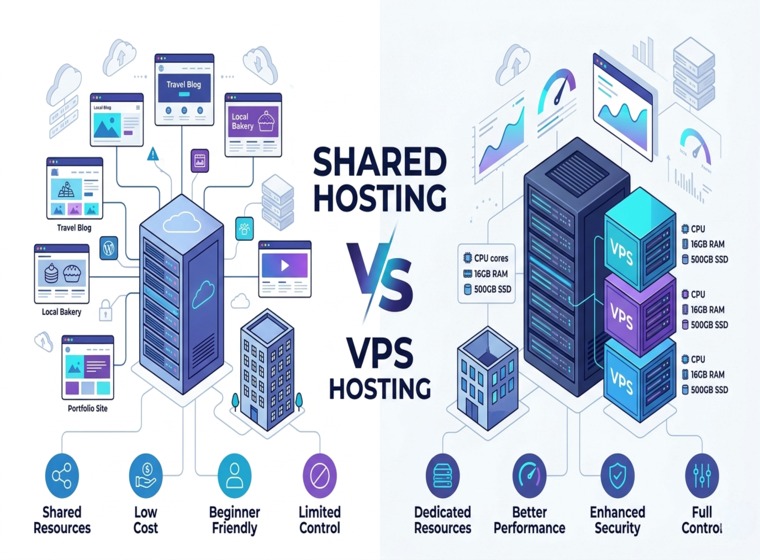
Shared hosting is a web hosting environment where multiple websites share the same physical server and its resources, including CPU, RAM, storage, and bandwidth.
Because many users share the same server, hosting providers can offer shared hosting plans at affordable prices. This makes shared hosting an excellent option for beginners, bloggers, startups, and small business websites.
Think of shared hosting like living in an apartment building. While you have your own apartment, you share the building's infrastructure and utilities with other residents.
Advantages of Shared Hosting
- Affordable monthly pricing
- Easy setup for beginners
- No server management required
- Hosting provider handles maintenance
- Suitable for low to medium traffic websites
Disadvantages of Shared Hosting
- Resources are shared with other users
- Performance may fluctuate during traffic spikes
- Limited customization options
- Less control over server configurations
- Potential impact from neighboring websites
What Is VPS Hosting?
VPS stands for Virtual Private Server. A VPS uses virtualization technology to divide a physical server into multiple independent virtual servers.
Each VPS receives dedicated resources such as RAM, CPU power, storage, and operating system access. This creates a more isolated and reliable hosting environment.
A VPS can be compared to owning a condominium. While the building itself is shared, your unit remains private and comes with dedicated resources.
Advantages of VPS Hosting
- Dedicated server resources
- Better website performance
- Improved security and isolation
- Root access and server control
- Support for custom software installations
- Easier scalability as your website grows
Disadvantages of VPS Hosting
- Higher cost compared to shared hosting
- May require technical knowledge
- Additional management responsibilities on unmanaged plans
Shared Hosting vs VPS Hosting: Key Differences
Performance
Performance is one of the biggest differences between shared hosting and VPS hosting.
With shared hosting, resources are divided among many websites. If another website experiences a sudden traffic spike, your website's speed may be affected.
VPS hosting provides dedicated resources that are reserved exclusively for your website, resulting in faster loading times and more stable performance.
Winner: VPS Hosting
Security
Security is essential for every website, especially businesses and ecommerce stores.
Shared hosting environments are generally secure, but users share the same server environment. VPS hosting offers greater isolation, reducing risks associated with neighboring accounts.
Winner: VPS Hosting
Control and Customization
Shared hosting offers limited access to server settings. Most users manage their websites through a hosting control panel.
VPS hosting provides root access, allowing you to install custom software, configure firewalls, and optimize server settings according to your requirements.
Winner: VPS Hosting
Pricing
Shared hosting is the most affordable hosting solution available and is ideal for users on a budget.
VPS hosting costs more because it provides dedicated resources and additional flexibility.
Winner: Shared Hosting
Quick Comparison Table
| Feature | Shared Hosting | VPS Hosting |
|---|---|---|
| Cost | Low | Moderate |
| Performance | Shared Resources | Dedicated Resources |
| Security | Good | Excellent |
| Server Control | Limited | Full Access |
| Scalability | Limited | High |
| Best For | Beginners | Growing Websites |
When Should You Choose Shared Hosting?
Shared hosting is the best choice if you are starting your first website and want an affordable hosting solution.
- Personal blogs
- Portfolio websites
- Startup landing pages
- Small business websites
- Websites with low traffic levels
Many successful websites begin on shared hosting before upgrading to a VPS as their traffic grows.
When Should You Choose VPS Hosting?
VPS hosting is ideal for websites that require better performance, security, and scalability.
- Online stores and ecommerce websites
- High-traffic WordPress websites
- Membership platforms
- Laravel applications
- SaaS products
- Business-critical websites
If your website generates revenue or serves a large number of visitors, VPS hosting is often the better investment.
Shared Hosting vs VPS for WordPress
For new WordPress websites, shared hosting is usually sufficient and cost-effective.
However, as your website grows and receives more traffic, VPS hosting can significantly improve loading speeds, user experience, and overall reliability.
WooCommerce stores, membership websites, and large blogs often benefit from VPS hosting due to increased resource requirements.
Shared Hosting vs VPS for Laravel Applications
Laravel applications typically require greater flexibility and server-level customization than standard websites.
Developers may need access to queues, cron jobs, Redis, Node.js services, and advanced PHP configurations.
For these reasons, VPS hosting is generally the preferred choice for Laravel development and production environments.
Signs It's Time to Upgrade to VPS Hosting
- Your website loads slowly during busy periods
- You receive resource limit warnings
- Traffic is steadily increasing
- You need custom server software
- You run an ecommerce store
- You require enhanced security measures
If you notice any of these signs, upgrading to a VPS can help maintain performance and support future growth.
Does VPS Hosting Improve SEO?
VPS hosting does not directly improve search engine rankings, but it can indirectly support SEO efforts.
Faster page loading times, better uptime, and improved user experience are factors that contribute to stronger website performance and visitor satisfaction.
A well-optimized VPS environment can help your website handle traffic more efficiently while maintaining consistent speed.
Final Verdict
Shared hosting is the best option for beginners, personal websites, blogs, and small businesses looking for an affordable and easy-to-manage hosting solution.
VPS hosting is ideal for growing businesses, ecommerce stores, developers, and websites that require better performance, enhanced security, and greater control.
If your website is just starting out, shared hosting is usually the most practical choice. As your traffic, revenue, and resource requirements increase, upgrading to VPS hosting becomes a smart investment that supports long-term growth and reliability.
Recent Posts




0 Comments
No comments yet. Be the first to comment!